Call us now:

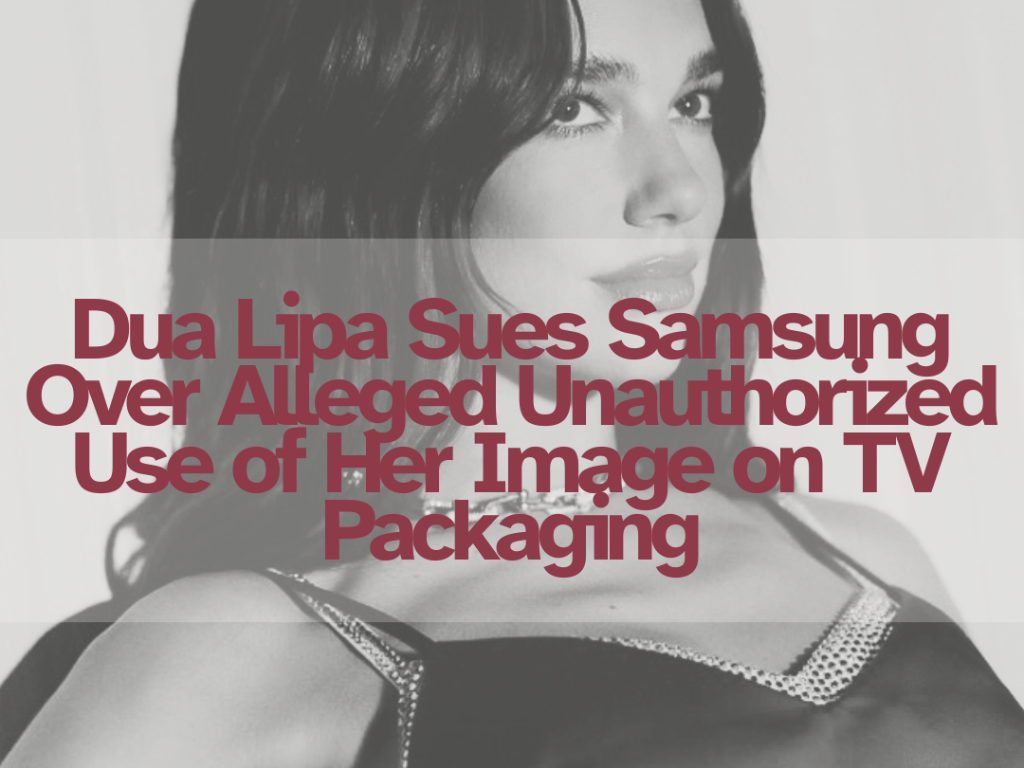
Dua Lipa Sues Samsung Over Alleged Unauthorized Use of Her Image on TV Packaging
Celebrity images are powerful commercial assets. When a recognizable artist’s face appears on product packaging, the legal issues may extend far beyond ordinary photo use. A new lawsuit filed by Dua Lipa against Samsung highlights how one image can raise multiple intellectual property claims, including copyright infringement, trademark infringement, false endorsement, and violation of the right of publicity.
On May 8, 2026, Dua Lipa filed a complaint in the United States District Court for the Central District of California against Samsung Electronics America, Inc. and Samsung Electronics Co., Ltd. The complaint alleges that Samsung used a copyrighted image of Dua Lipa on cardboard television boxes without authorization, consent, or license.
What Is the Dua Lipa Samsung Lawsuit About?
According to the complaint, Samsung allegedly used an image titled “Dua Lipa – Backstage at Austin City Limits, 2024” on packaging for Samsung televisions sold in the United States. Dua Lipa alleges that she owns the copyright in that image, which is registered with the United States Copyright Office under Registration No. VA 2-479-685.
The complaint alleges that Samsung reproduced, distributed, displayed, marketed, and sold televisions in packaging bearing the image without permission. Dua Lipa claims that this unauthorized use allowed Samsung to benefit commercially from her image, brand identity, and celebrity goodwill.
The lawsuit seeks injunctive relief, actual damages, Samsung’s profits attributable to the alleged unauthorized use, punitive damages, attorneys’ fees, costs, and other relief. The complaint requests damages of no less than $15 million, subject to proof at trial.
Why This Case Matters for Copyright Law
At the copyright level, the claim is relatively direct: Dua Lipa alleges that she owns a registered copyrighted image and that Samsung copied, distributed, and displayed that image without authorization. Under the Copyright Act, the owner of a copyrighted photograph may have exclusive rights to reproduce, distribute, and publicly display the work.
This case is a reminder that using a photograph in commercial packaging is not merely decorative. If a company uses a copyrighted photo on product packaging without a proper license, that use may trigger copyright exposure, especially when the packaging is distributed nationwide.
For businesses, the practical takeaway is clear: a product launch should include photo clearance, copyright ownership review, licensing scope review, and documentation of permissions before any image appears on packaging, advertising, retail displays, or e-commerce listings.
Why This Case Also Raises Trademark and False Endorsement Issues
Dua Lipa’s complaint does not stop at copyright. It also alleges false endorsement and trademark infringement under Section 43(a) of the Lanham Act. The theory is that Samsung’s use of her image could confuse consumers into believing that she endorsed, approved, sponsored, or was affiliated with the televisions.
That distinction is important. Copyright law focuses on the unauthorized use of the image itself. Trademark and false endorsement law focus on consumer perception. If consumers see a celebrity’s image on product packaging, they may believe there is a commercial partnership, endorsement, or sponsorship.
The complaint points to social media reactions allegedly showing that consumers associated the packaging with Dua Lipa, including comments suggesting that her image influenced interest in the product.
For brands, this is one of the most important lessons from the Dua Lipa Samsung lawsuit: even if a company believes it has permission to use an image, it must also consider whether the use creates an implied endorsement.
The Right of Publicity Claim
Dua Lipa also asserts statutory and common law right of publicity claims. The complaint alleges that Samsung used her image and likeness for the commercial purpose of advertising, selling, or soliciting purchases of televisions without authorization.
The right of publicity protects a person’s commercial interest in their identity, including their name, image, likeness, persona, and recognizable attributes. For celebrities, musicians, influencers, athletes, and public figures, these rights can be highly valuable because their identity often functions as a marketable brand asset.
This is why photo clearance and likeness clearance are not the same thing. A company may need permission from the copyright owner of the photo and permission from the person depicted in the photo. When the person is a celebrity, the commercial association can be especially significant.
Key IP Takeaways for Brands and Creators
The Dua Lipa Samsung lawsuit offers several practical lessons for companies, marketing teams, and creators:
- Clear the copyright. Confirm who owns the image and whether the license covers the exact use, including product packaging.
- Clear the likeness. If the image depicts a recognizable person, obtain name, image, and likeness consent.
- Evaluate endorsement risk. Ask whether consumers could reasonably believe the person endorses or is affiliated with the product.
- Review the product category. Celebrity licensing deals often contain category restrictions, exclusivity terms, and approval rights.
- Document the scope. Permissions should address territory, duration, media, packaging, retail use, digital use, and sublicensing.
- Do not assume packaging is passive. Packaging is commercial speech and can function as advertising.